Industrial Digital Signage Manufacturer: Complete Guide 2026
What is an Industrial Digital Signage Manufacturer?
An industrial digital signage manufacturer specializes in designing and producing display solutions built for demanding environments. Unlike consumer-grade displays, industrial digital signage is engineered for durability, long operating hours (24/7), and stable performance under extreme conditions.
These manufacturers typically offer customized solutions, including rugged enclosures, high-brightness screens, and flexible integration options for different industries.
Key Features of Industrial Digital Signage
Industrial digital signage stands out due to its advanced features:
- 24/7 Continuous Operation
Designed for uninterrupted usage without performance degradation. - High Brightness Displays
Typically ranging from 500 to 3000 nits, suitable for bright indoor, semi-outdoor or outdoor environments. - Robust Build Quality
Metal housing, anti-vibration design, and industrial-grade components. - Wide Temperature Support
Operates reliably in both high and low temperature environments. - Multiple Interfaces
HDMI, DP, Com, USB and LAN support for flexible integration. - Touchscreen Options
Capacitive or resistive touch for interactive applications, Support waterproof touch, touch with gloves.
Industry Applications
Industrial digital signage is widely used across various sectors, especially in environments that require high reliability, durability, and intelligent interaction.
Smart Transportation Hubs
This is one of the largest demand sectors for industrial digital signage due to the requirement for 24/7 continuous operation.
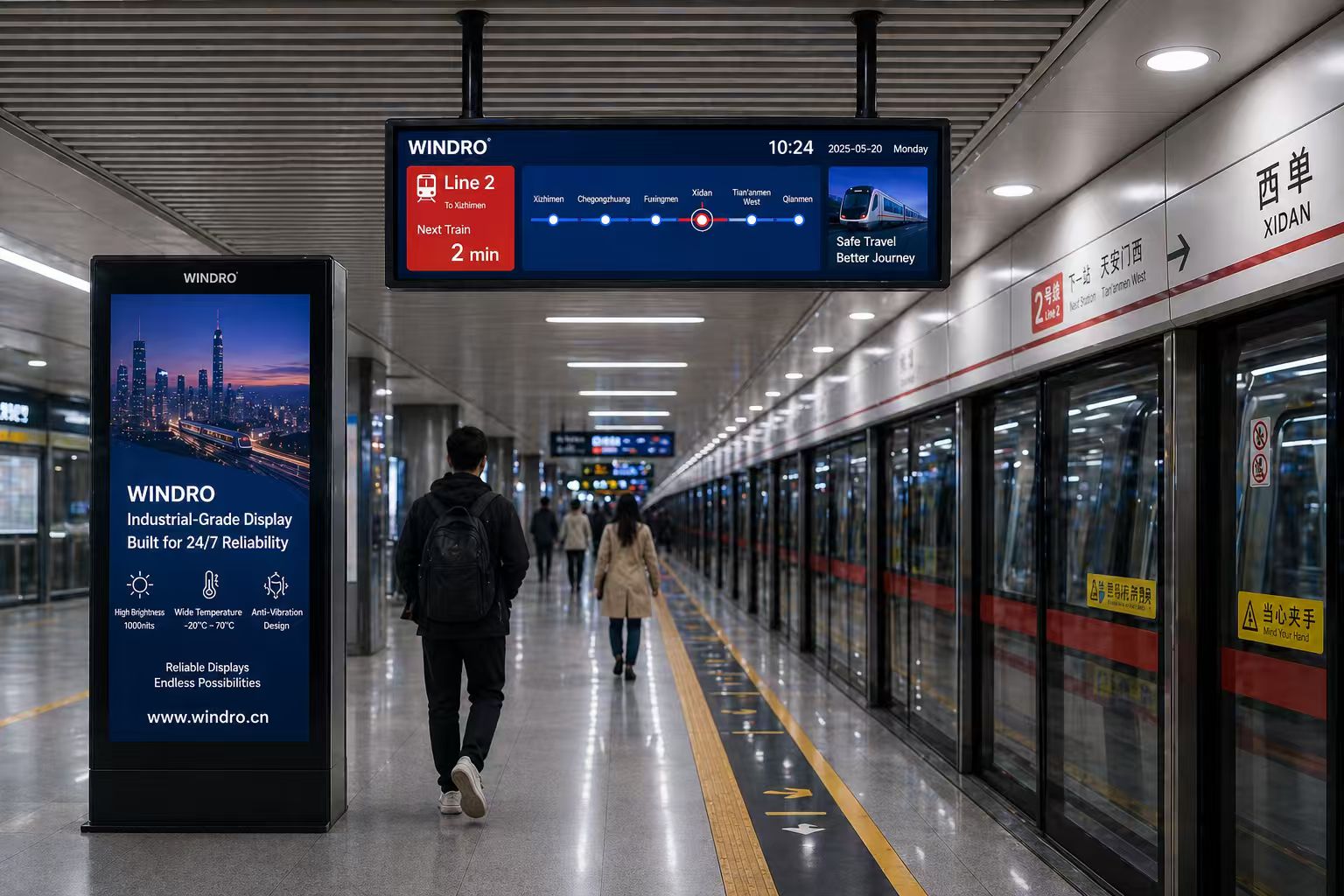
WINDRO industrial digital signage solution deployed in a subway station, featuring high brightness displays and reliable 24/7 operation for transportation environments.
- Bar Strip Displays
Widely used in subway platforms and inside buses to display real-time route information and arrival updates. - Outdoor High-Brightness Displays
Installed in train stations and airports, ensuring clear visibility even under direct sunlight (1000–2000 nits). - Waterproof & Anti-Vibration Design
Built to withstand extreme weather conditions such as heavy rain and high temperatures, as well as constant vibration from vehicles.
Smart Manufacturing & Industry 4.0
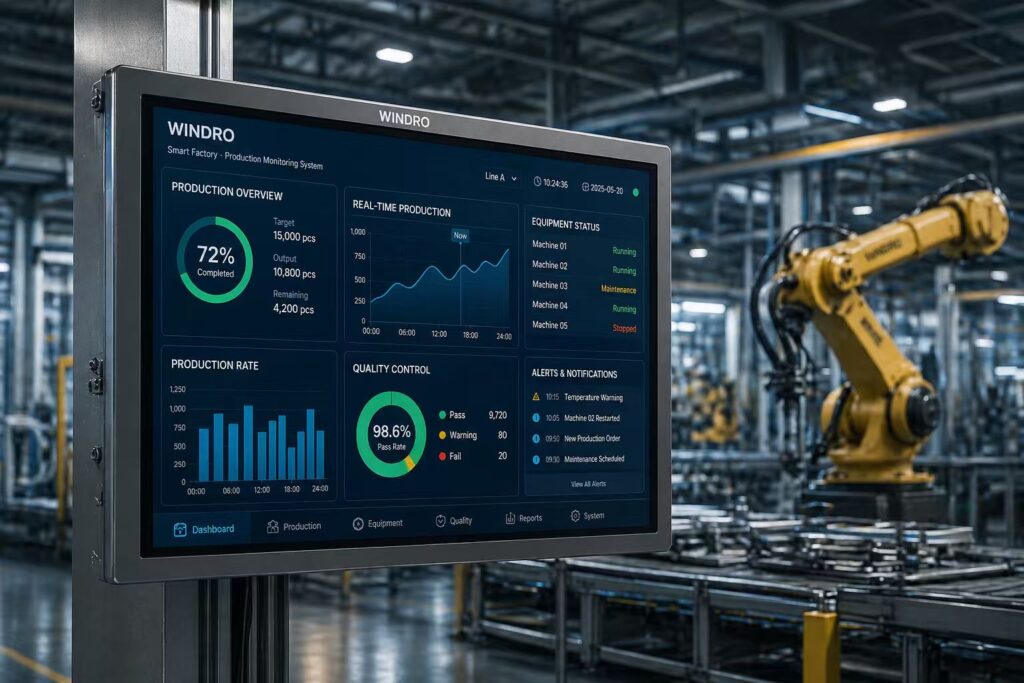
In factory environments, displays must resist electromagnetic interference, oil contamination, and temperature fluctuations.
- KPI Dashboards
Deployed on production lines to display real-time output, equipment status (OEE), and fault alerts. - Safety Warning Systems
Integrated with industrial sensors to automatically switch to high-frequency flashing alerts and display emergency evacuation routes. - Interactive Workstations
Support glove-touch operation (capacitive or resistive), enabling workers to access technical drawings and remote collaboration tools.
Interactive Retail & Self-Service
Modern retail environments leverage human induction technology to enhance user engagement.
- Motion-Activated Digital Signage
Screens automatically switch from standby to dynamic 4K promotional content when customers approach, increasing engagement and conversion rates. - Outdoor Self-Service Terminals
Used in ticketing machines, parcel lockers, and kiosks. With IP65–IP69K protection, they effectively resist dust and water. - Museums & Exhibition Spaces
Ultra-thin 4K displays combined with sensors create immersive “interactive-on-approach” experiences.
Healthcare Environments
In hospitals and public health systems, industrial digital signage prioritizes hygiene, stability, and system integration.
- Contactless Interaction
Gesture control and motion sensors reduce physical contact during registration and information lookup, improving hygiene standards. - Wayfinding & Navigation
Dynamic guidance systems help manage patient flow and reduce congestion. - Pharmacy & Waiting Area Displays
Real-time queue management systems with seamless integration into hospital databases, supporting multiple operating systems such as Linux and Ubuntu.
Energy & Harsh Outdoor Environments
Industrial digital signage plays a critical role in extreme and high-risk environments.
- Oil & Gas Station Displays
Require explosion-proof design and stainless steel enclosures to prevent corrosion and ensure safety. - Smart Streetlight Displays
Integrated into lamp posts to provide public information such as weather updates and EV charging status. - Wide Temperature Operation
Designed to operate reliably in extreme conditions, from -20°C cold regions to 70°C tropical climates, without screen blackout or system failure.
How to Choose the Right Digital Signage Manufacturer
Choosing the right partner is critical for long-term project success. Here are key factors to consider:
How to Choose the Right Digital Signage Manufacturer
When selecting a digital signage manufacturer, consider the following:
- Brightness (Indoor vs Outdoor)
- 24/7 operation capability
- Customization (OEM/ODM)
- Operating system support (Android / Windows / Linux)
- Protection level (IP rating)
- Long-term supply stability
Choosing the wrong supplier can lead to overheating, downtime, and higher maintenance costs.
1. Customization Capability
Look for a manufacturer that supports structural customization to fit your cabinets, kiosks, or equipment.
2. Product Stability
Industrial applications require highly stable systems with low failure rates.
3. Interface Compatibility
Ensure the display supports required interfaces such as HDMI, DP, and RS232.
4. Brightness Requirements
For high ambient light environments, choose displays with higher brightness levels (700+ nits).
5. Operating System Options
Manufacturers offering both Android and Windows solutions provide more flexibility.
Industrial vs Commercial Digital Signage
| Feature | Industrial Digital Signage | Consumer Display |
|---|---|---|
| Operation | 24/7 | 8–10 hours |
| Brightness | 1000–3000 nits | 250–400 nits |
| Durability | High | Low |
| Environment | Outdoor / Harsh | Indoor only |
Why Choose WINDRO as Your Industrial Digital Signage Manufacturer
WINDRO is a professional industrial and commercial display manufacturer with extensive experience in global projects.
Key advantages include:
- Custom structural design tailored to different cabinets and enclosures
- Support for Android,Windows,Linux, Ubuntu systems
- High-brightness display options up to 3000 nits
- Full interface support including HDMI, DP, USB, RJ45 and Com
- Strict quality control for long-term stable operation
WINDRO focuses on delivering reliable and flexible digital signage solutions that integrate seamlessly into various industry applications.
FAQ (Frequently Asked Questions)
What is an industrial digital signage manufacturer?
An industrial digital signage manufacturer provides high durability, customizable display solutions for harsh environments.
What is the difference between industrial and commercial digital signage?
Industrial digital signage is designed for harsh environments and continuous operation, while commercial displays are typically used for lighter, indoor applications.
Can industrial digital signage run 24/7?
Yes, industrial-grade displays are specifically built for continuous 24/7 operation.
What brightness is needed for digital signage?
For indoor use, 300–500 nits is sufficient. For brighter environments, 700 nits or higher is recommended.
What brightness is needed for outdoor digital signage?
Typically 1000–3000 nits depending on sunlight exposure.
Do industrial displays support touch functionality?
Yes, most industrial digital signage solutions support capacitive or resistive touch options.
What industries use industrial digital signage?
Retail, healthcare, manufacturing, transportation, and smart city applications all widely use industrial digital signage.
With the rise of AI-driven digital signage and edge computing, modern systems are becoming more intelligent, enabling real-time content adaptation and analytics.